Try it out
Watch it happen. Below is a short passage, revealed one part at a time — the way meaning actually arrives as you read. After each part appears, stop and notice the picture in your head: who is this, where are they, what’s happening? Only then reveal the next part — and watch how your mind quietly rewrites what it thought it knew.
See what your mind just did? For most readers, “instruments,” “precise,” “finest point,” and “one slip” build a clinical scene — a surgeon, a dentist. Then one word — “icing” — rewrites everything: Maya is decorating a wedding cake. That instant, silent revision is comprehension in action, and it’s only possible because fluency, vocabulary, knowledge, and the other pieces were all running at once, holding the picture together and rebuilding it on the fly.
Comprehension Under Construction
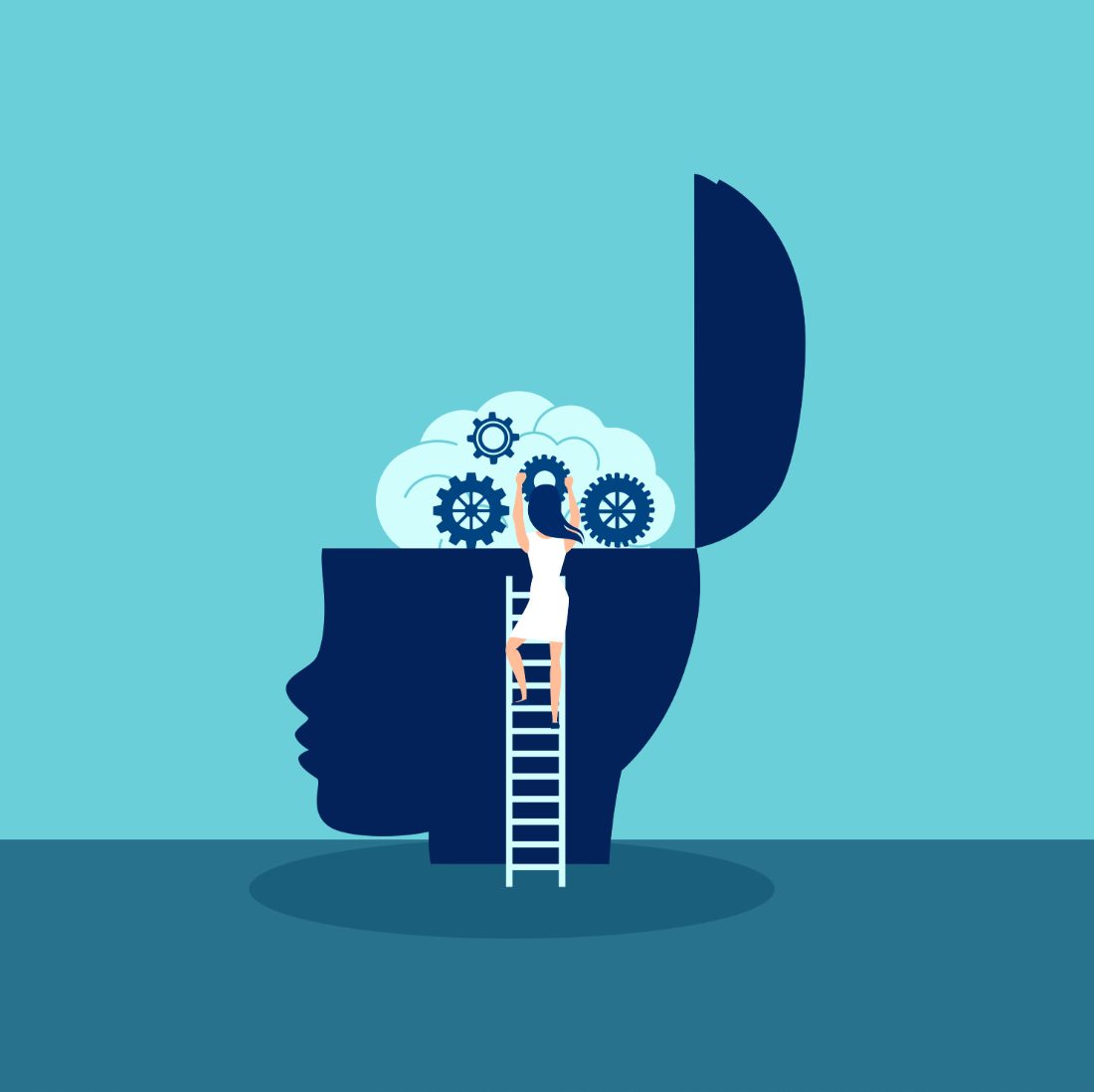
When you read, you aren’t storing the words. You’re building a mental model: a living picture of who is doing what, where, and why. It is the difference between calling the words on a page and actually understanding the passage they make.
That picture is the whole point. Every one of the eight conditions (fluency, knowledge, vocabulary, sentence structure, and the rest) feeds it. The model forms astonishingly fast, updates with every single word, and quietly collapses the moment a condition goes unmet. Comprehension isn’t one skill; it’s all of them converging into a single, evolving picture. It is a living, changing picture a reader builds and updates in the mind — and meeting all eight conditions is not the same as coordinating them. Mental modeling needs its own attention; readers don’t automatically pull the conditions together into meaning.
Free download — the one-pagerReading · Writing · Listening · Speaking
It’s not unusual for a student to need to just get the answer right or practice a skill, and that is worthwhile. But we can’t stop at discrete skills, or let them take up more than their share of the instructional time. What lifts each modality is a sound, vivid, and durable mental model. It’s an integrated move in all four modalities, and it gives literacy real power and joy.
Taking in · “On the page”
Decoding gets you the words, and that is real work. A student can answer every comprehension question and still just be getting through the passage. The act of Reading is building a world inside the text, and letting it change how you see.
Sharing out · “On the page”
Transcription gets words onto the page, and it has to be taught. A student can fill the page, hit every line of the rubric, and still say nothing. The act of Writing is shaping a mental model into language another reader can rebuild.
Taking in · “Out loud”
Hearing catches the sounds, that part is a given. A student can catch every word and still be only finishing the assignment, following the rules, playing the school game. The act of Listening is building meaning from what is said, and even letting a voice change your mind, including the voice we hear inside as we read.
Sharing out · “Out loud”
Articulation makes the words clear, and that is worth teaching. A student can say the right answer and play the school game without ever risking a real idea. The act of Speaking is turning a mental model into words a listener can build with, including the words we rehearse first in our own head.
The skill matters. And so does having a meaningful purpose.
Keep going
Our books are the place to go deeper.
The books
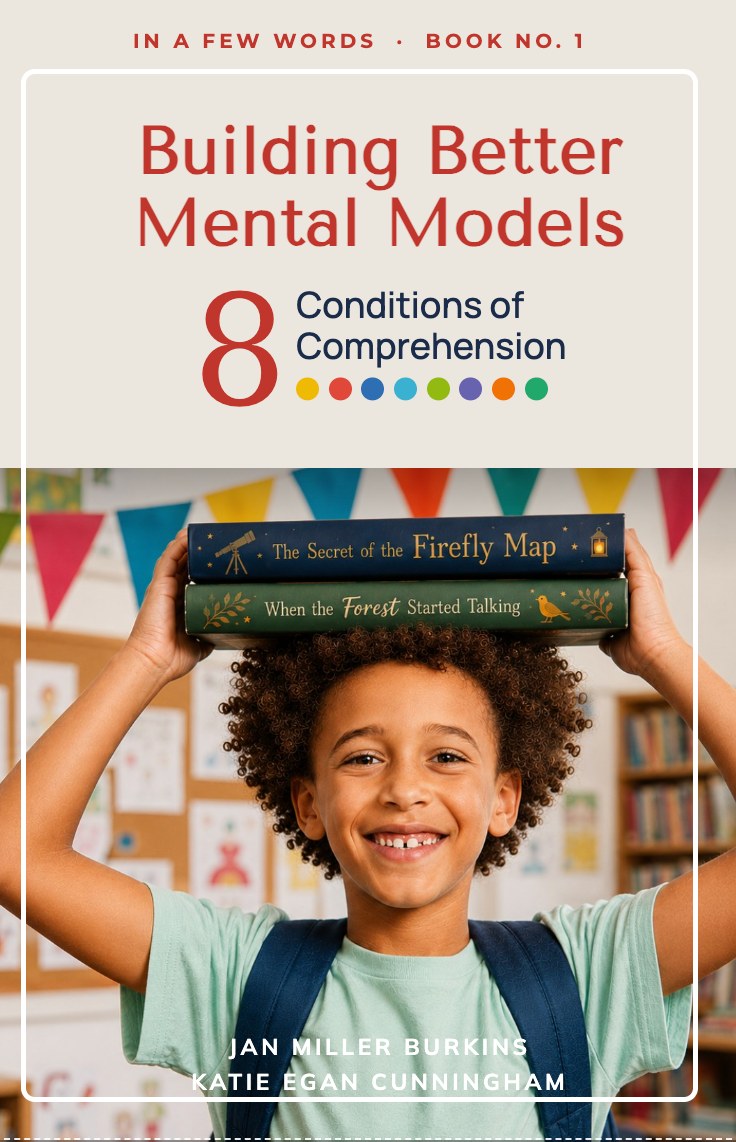 Available now
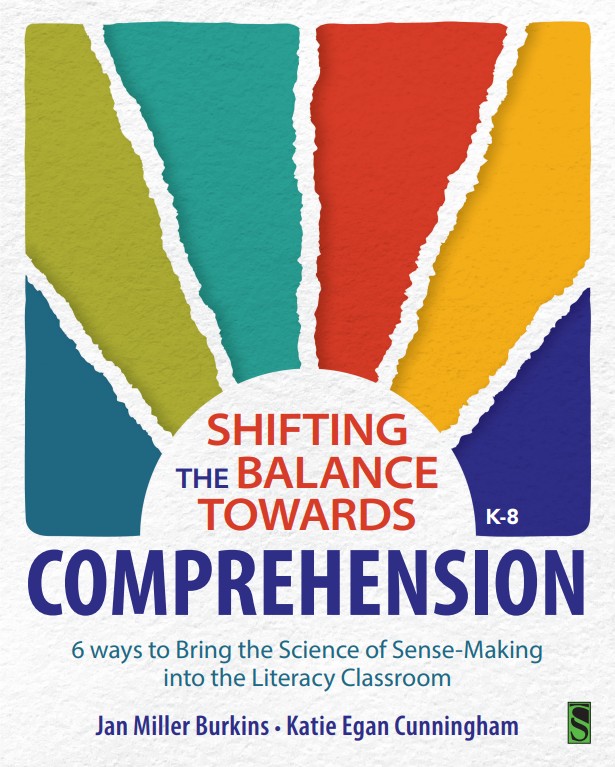 Summer 2027
Two teacher-facing books on comprehension and the eight conditions, the reading science, made classroom-ready.
Learn more →How it works
—Neat compartmentalized skills and strategies we can teach individually
Grounded in research
The conditions aren’t a new theory. They’re a teacher-facing synthesis of the science that already defines skilled reading — a way to put the frameworks below to work in a classroom.
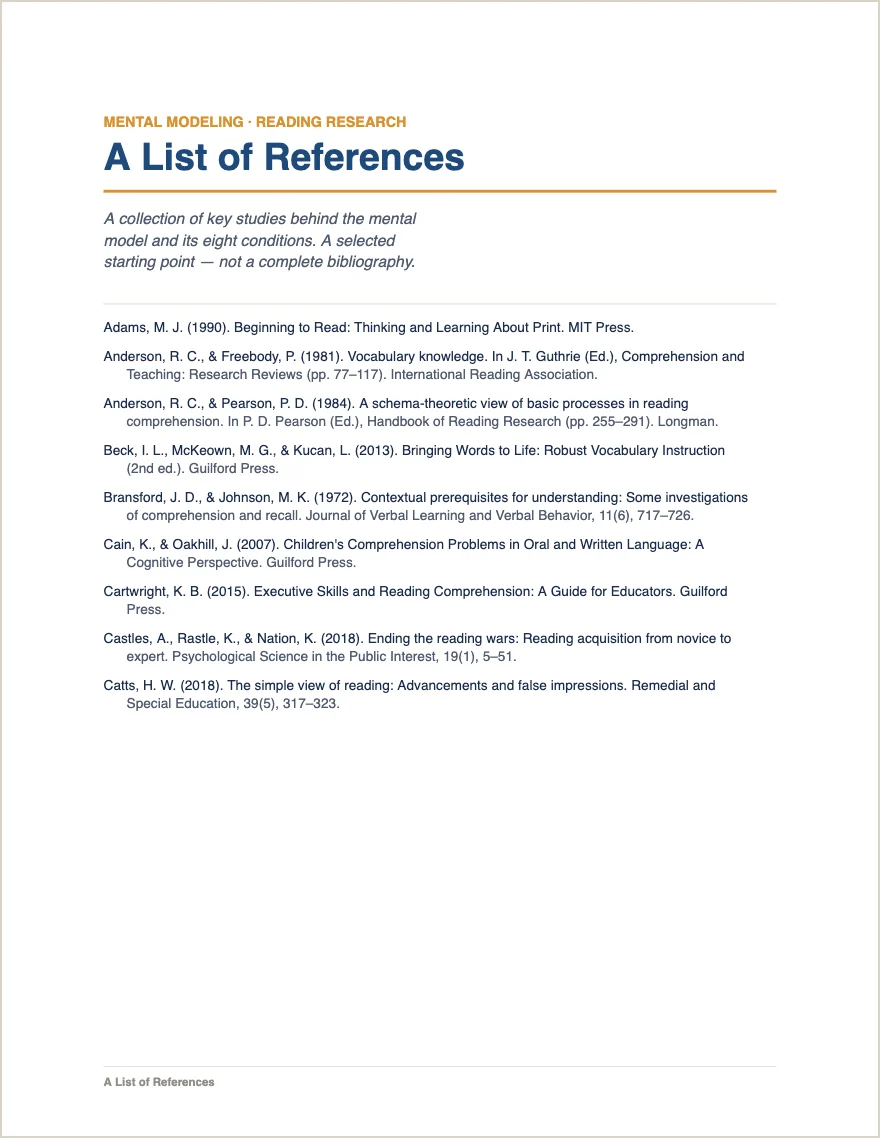
A collection of key studies behind mental modeling and its eight conditions. A selected starting point, not a complete bibliography. A few pages, free to print.
More to come
We’re always cooking up new guides, tools, and briefs.
Want to hear about them when they roll out?